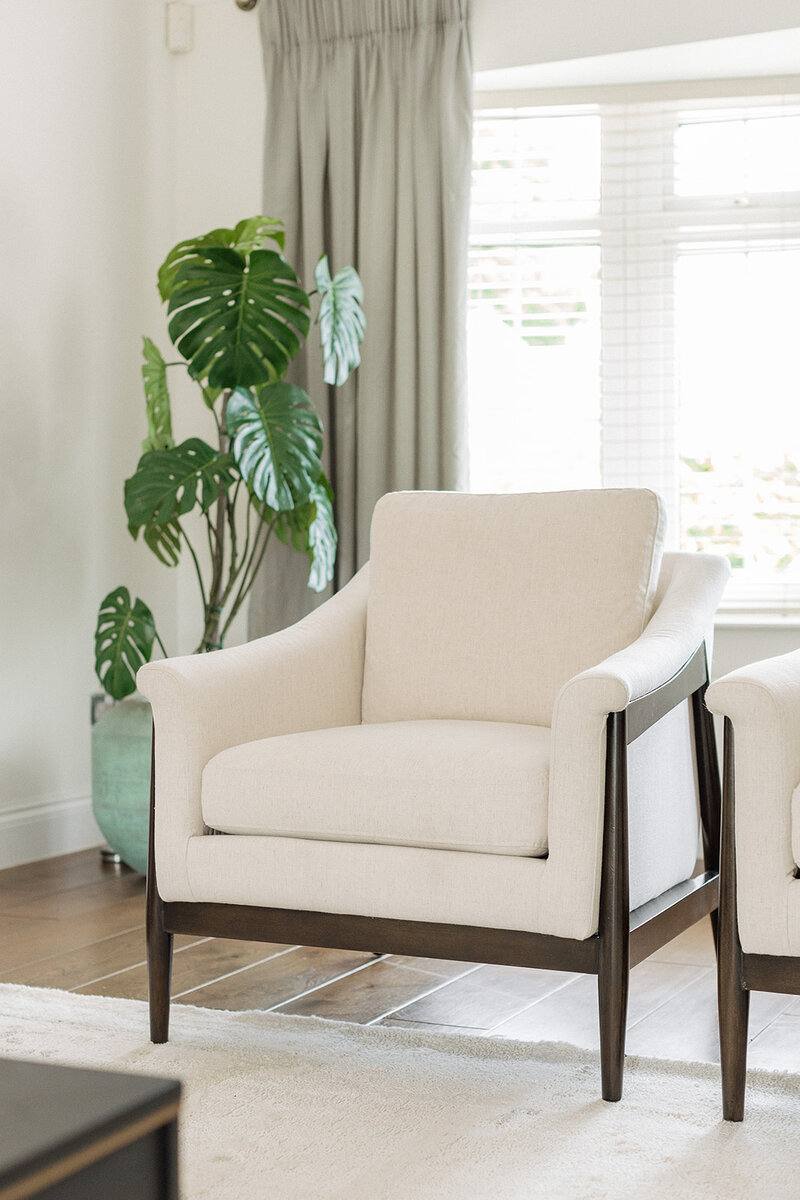
A reupholstered sofa keeps its original wooden frame and internal structure intact, but receives new fabric covering, new foam or filling where worn, and recovered cushions and arms. The transformation is structural and visual: the bones of the furniture stay the same, but the surface, comfort and longevity are restored. Whether your sofa is worth reupholstering depends on the frame condition and your budget versus replacement cost.
What stays the same when a sofa is reupholstered
The wooden frame of your sofa is the foundation that determines whether reupholstery makes sense. If that frame is solid—no rot, no major fractures, joints still tight—it can be recovered indefinitely. The springs, webbing and internal structure usually remain too, provided they aren’t visibly sagging or broken. Reupholstery is not a rebuild; it’s a recovery. You are keeping the furniture you know, with the same dimensions, height and basic feel, but with new fabric and renewed comfort where the original covering and filling have worn thin.
This is why reupholstery matters to households and businesses across Barking, Dagenham, Ilford and East London: you don’t lose the sofa you chose or paid for. A quality frame from ten or twenty years ago—often heavier and better jointed than newer mass-produced alternatives—is worth keeping. The cost of a new sofa of equivalent quality often exceeds the cost of expert recovery, and you avoid the disposal headache and the wait for delivery.
What changes when your sofa is recovered
The visible fabric is the most obvious change. You choose a new material—a hardwearing domestic weave, a leather, a vintage textile—and your sofa emerges in that finish. But the work goes deeper. Worn foam in the seat and back is usually replaced with new, medium-density foam of appropriate thickness, restoring comfort and support. Cushion covers are stripped and recovered; if the cushion filling is flattened, it too is replaced. The arms, piping, and any decorative elements are re-covered or refreshed to match the new fabric.
Webbing—the woven strips that support the springs—is often re-tensioned or partially replaced if slack. The underside of the sofa, the legs, and any visible woodwork are inspected and cleaned. Stains, odours and damage confined to the fabric are gone. What emerges is a sofa that functions and looks renewed, but on the same structural chassis. The before-and-after is immediate and tangible: a sofa that sat unwelcome in a corner becomes inviting again.
How you know your sofa frame is worth recovering
Check three things before you commit to reupholstery. First, sit the sofa and push down on the arms and seat. The frame should not creak, flex excessively, or feel unstable. Second, inspect the underside—lift a corner if you can—and look for soft wood, splits or woodworm. Sound wood is hard to the fingernail and shows no insect trails. Third, assess the joints: wobble the arms gently. Tight joints mean the glue and pegs holding the frame together are still good. If the frame passes these checks, reupholstery is a sound investment.
A sofa with a compromised frame—loose joints, soft wood, significant rot—will not regain stability through reupholstery alone. Repair is possible but usually falls outside basic recovery and adds cost. If the frame is solid, though, age is irrelevant. Sofas in the Herd Upholstery portfolio from Barking and East London have ranged from contemporary to thirty years old; condition matters more than age. Get a quote: within 48 hours, you’ll know whether recovery is viable and what it costs.
Why commercial upholstery—pubs, restaurants, booths—relies on recovery
Booth and banquette seating in hospitality venues wears faster than domestic furniture. Constant use, spill exposure and the need for cleanable, durable fabrics make fabric the consumable part of the installation. The bench frame—whether built-in or freestanding—is typically robust, often hardwood with proper joinery. Professional reupholstery means you replace the fabric seasonally or every two to three years without replacing the entire booth, and without closing for lengthy downtime. A fitted booth recovered over a weekend returns to service looking fresh.
This economics applies equally to pubs, cafés and restaurants across the region. The alternative—replacing entire seating installations—is disruptive and expensive. Recovery with specialist fabrics (stain-resistant, fire-rated, easy-clean) restores appearance and function at a fraction of replacement cost. It is also the sustainable choice: the frame endures; only the covering is renewed.
The visual transformation: before-and-after expectations
A professional reupholstery transforms a sofa from tired to renewed. Sagging seats firm. Stained or faded fabric is replaced with your choice of colour or texture. Threadbare arms recover their shape and sheen. Cushions that sat flat regain structure. The sofa returns looking—and feeling—like furniture worth sitting on again. The frame shape and proportions are unchanged, but the overall impression shifts from worn to cared-for. If the original sofa was well-designed, that design emerges again, sometimes more clearly than in its original state.
Colour choice shapes the visual impact most. A traditional sofa in dated floral can become contemporary in a neutral weave or linen. A modern piece in worn grey can emerge in jewel tones or textured earth materials. The craftsperson's work—seaming, piping, tucking—becomes visible too. Quality reupholstery shows in tight, even seams and precise corner work. The before-and-after is not a new sofa; it is the sofa you owned, restored and refreshed. That distinction matters if you value the design and comfort you already know.
Getting a fixed quote and understanding the process
The first step is contact. Photographs of your sofa—front, side, underside, any damage or wear—sent to the studio, lead to a site visit or studio appointment where the frame is assessed, fabric options are reviewed, and a fixed quote is provided within 48 hours. The quote includes collection, recovery and return. There are no surprises: the price stated is the price you pay. This transparent approach removes the barrier many people feel towards reupholstery, which has a reputation for vague estimates and hidden costs.
Once you approve the quote, the sofa is collected. It is stripped to the frame, the internal state is assessed, foam is renewed as needed, and the new fabric is cut and fitted by hand. Depending on the scope, the sofa is returned within a defined timeframe. Throughout, you have clear communication about progress and any unexpected findings—for example, if webbing needs replacement, you are told and the cost is agreed before work proceeds. The outcome is a recovered sofa returned to your home or business, ready to use. Contact the studio to discuss your sofa and receive a quote.