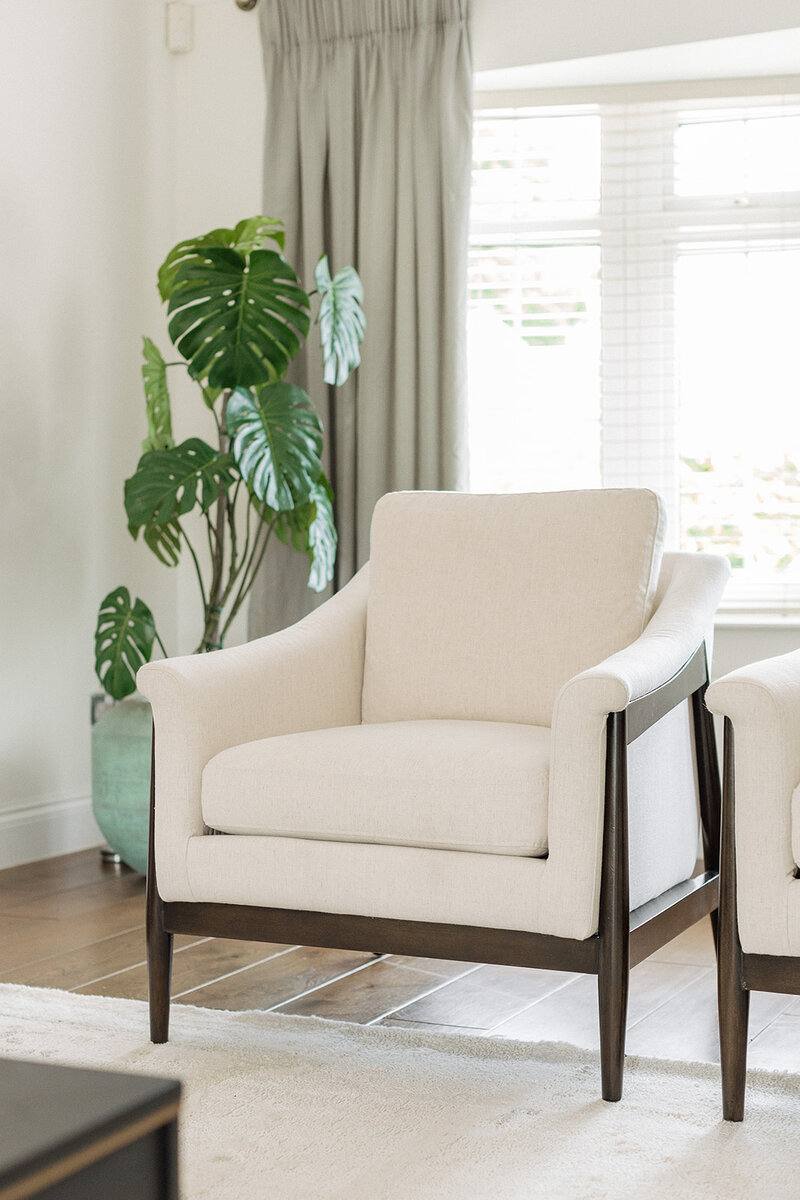
A reupholstered sofa keeps its original frame intact while the old fabric, padding and cover come away completely, and new upholstery materials go back on. The frame itself — the wooden skeleton that gives your sofa its shape and strength — is cleaned and checked for damage, then rebuilt with fresh padding and your chosen fabric. Herd Upholstery collects your sofa, strips it bare, recovers it, and returns it ready to use, usually within four to six weeks.
Why the frame stays, and what gets stripped away
The frame of your sofa is the part worth keeping. It’s the hardwood structure — usually beech, ash or similar — that bears the weight and determines how long the piece will last. When you reupholster, that frame doesn’t get replaced; it gets a second life. What comes off is everything else: the old fabric cover, the worn padding underneath, the webbing and springs that sag over time, and any synthetic fillings that have compacted or lumped.
Your sofa arrives at the studio as a whole piece. The upholsterer then systematically strips it back to the frame — removing staples, separating layers of material, and setting aside anything that can’t be reused. This is where before-and-after photos show the starkest contrast: a plush, fabric-covered sofa becomes a bare wooden skeleton. What you’re looking at then is the truth of the original build quality. A solidly made frame with no splits, loose joints or woodworm is a sign you’ve got something worth recovering.
The frame gets cleaned once it’s bare. Dust, old adhesive residue and debris that settled between layers over years come away. If small repairs are needed — a loose mortise, a crack in the timber — they happen now, before new padding goes back on. This is the stage where the craftsman can see exactly what the sofa is made of and assess whether it will take the weight and movement of new upholstery well.
How new padding and springs restore comfort and shape
Once the frame is clean and sound, the recovery builds outward in layers. New webbing — the support strips that hold springs or cushioning — is stretched across the frame in a grid pattern. Springs, if the original sofa used them, are either retied (if they’re still sound) or replaced. Then comes a base layer of hessian or burlap, which holds everything together and stops padding from sinking through gaps.
Padding goes on next, and this is where comfort is engineered back in. Depending on your sofa’s original style and your preference, the upholsterer will layer different weights of cotton, polyester or natural fibre padding. A firmer base layer provides support; a softer top layer creates the feel you sit into. The thickness and density are built to match the original design or your own brief — so a mid-century modern sofa recovers differently from a deep-buttoned Victorian piece. Before-and-after photos at this stage show a frame suddenly acquiring shape and bulk again.
Edge rolls and piping are added to tidy seams and reinforce the outline of the sofa. These are small details, but they define how clean and finished the piece looks once the cover fabric goes on. The frame is now essentially a new skeleton inside the old wooden bones.
Choosing fabric: what changes between before and after
The visible transformation — the part that really sells a reupholstery job — is the fabric cover. You choose the material based on durability, colour, pattern and feel. A sofa that spent ten years in neutral linen can come back in a deep navy wool, or a residential piece in Barking can recover in a durable performance fabric if it’s going into a busy family home. The frame and structure stay the same; the personality changes completely.
Fabric choice has practical consequences. A tightly woven wool will last longer in a high-traffic home than a loose linen weave; a performance fabric designed for pub or restaurant seating will resist spills and staining better than natural fibres. The upholsterer advises on durability based on how you use the sofa, so the before-and-after doesn’t just look good — it performs better. You’re also choosing to cover seams, piping colour, button depth (if the sofa was originally buttoned), and whether to add skirts, legs or other details that change the silhouette.
The timeline: from drop-off to return
The studio collects your sofa from your home in East London, Barking, Dagenham, Ilford or into Essex. This removes the hassle of transport and lets the upholsterer assess the piece in the space it’s lived in — understanding wear patterns and damage. Once it arrives at the studio, the stripping, repair, padding and recovery happen in sequence. The whole job usually takes four to six weeks, depending on the complexity of the frame, the availability of your chosen fabric, and the upholsterer’s current workload.
During recovery, your sofa is in the studio throughout. You don’t have a half-finished piece sitting in your living room. Once the cover is sewn and stapled, and all finishing touches are complete, the studio returns it to your home, positioned where it was before collection. The before-and-after moment arrives when the sofa comes back through your door — same shape and bones, entirely new exterior and renewed comfort.
How to know if your sofa is worth reupholstering
Not every sofa is a candidate for recovery. A solid frame — one with no major splits, sound joints, and no structural wobble — is the foundation. If the sofa sags in the middle, it’s usually because the springs have failed or the webbing has stretched, both of which the upholsterer repairs during recovery. If it tilts or feels unstable, the frame may be broken beyond economic repair, and replacement is the better option.
A sofa is worth recovering if it was well-made to begin with. Vintage and mid-century pieces, many residential sofas in East London homes built ten to forty years ago, and bespoke or quality commercial booth seating in restaurants and pubs are typically solid candidates. The before stage shows wear, staining, or dated fabric; the after stage reveals you’ve kept a structurally sound, well-jointed piece that will easily last another ten or fifteen years.
Cost-wise, full reupholstery sits between patching repairs (which only extend life briefly) and buying new. A fixed quote within 48 hours from the upholsterer tells you exactly what you’re investing, so you can compare honestly with the price of a new sofa and make an informed choice. Many households and businesses in the area choose recovery because the original frame is better-made than most new options at the same price point.
What before-and-after photos really show
Published before-and-after images from the studio’s residential reupholstery portfolio in Barking and East London show the full stripping, repair and recovery process. They document sofas in the bare-frame stage — so you see the actual quality of the original build — and then the finished recovery with new fabric, padding, and details. These aren’t marketing renderings; they’re honest documentation of how the work is done.
When you look at before-and-after photos, pay attention to the frame condition in the bare stage. Tight joints, no splits, clean timber underneath, and good proportions all signal a piece worth recovering. Also notice the finish details: piping, seams, any buttoning or pattern alignment, and how the fabric sits at the edges. A skilled recovery keeps the original proportions and style intent while delivering new life and durability. The best before-and-after shots show pieces from residential East London homes — ordinary sofas kept in ordinary living rooms, transformed by thoughtful recovery and quality materials, not by expensive boutique services or premium styling.